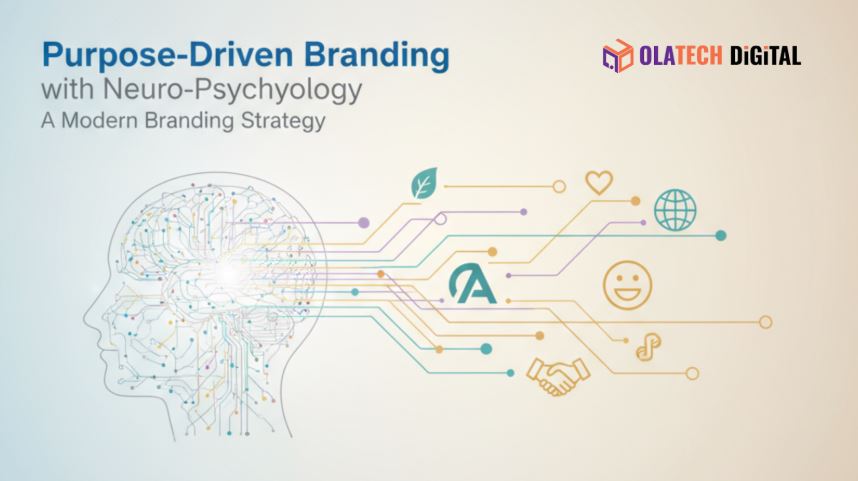
Purpose-Driven Branding with Neuro-Psychology: A Modern Branding
Strategy
Introduction
Branding today goes far beyond logos, slogans, or colors. A successful branding
strategy leverages psychology to connect with audiences on a deeper emotional level. By
applying principles of neuro-psychology, businesses can create a brand identity that
resonates with purpose, values, and emotions. This is where a branding agency can help
businesses unlock the hidden drivers of consumer behavior.
What is Purpose-Driven Branding?
Purpose-driven branding is about more than profit. It focuses on aligning a
brand’s core mission with values that matter to its audience. Instead of only promoting
products, brands emphasize their larger contribution to society, the environment, or human
well-being. When customers feel that a brand shares their beliefs and values, they are more
likely to stay loyal. For example, companies that support sustainability or community
development are often trusted and supported by socially conscious consumers.
The Role of Neuro-Psychology in Branding Strategy
Neuro-psychology helps explain how the human brain responds to brand messages,
colors, and emotions. Studies show that:
- 95% of purchasing decisions are subconscious.
- The brain responds more strongly to emotions than logic.
- Colors, imagery, and storytelling activate emotional memory centers.
By integrating neuro-psychology into branding strategy, businesses can design a
brand identity that appeals directly to customer emotions and builds long-lasting
connections.
Key Elements of a Purpose-Driven Branding Strategy
- Define Core Purpose: Your brand should have a clear mission that goes
beyond profit. This purpose guides your communication and creates trust.
- Emotional Storytelling: Neuro-psychology shows that stories activate
multiple areas of the brain, making messages memorable. A compelling brand story helps
customers connect emotionally.
- Visual Identity Design: Colors, typography, and design patterns should
align with psychological triggers. For example:
- Blue = Trust
- Red = Excitement
- Green = Growth and Nature
- Consistency Across Channels: A strong brand identity requires
consistency across websites, social media, packaging, and advertising. Repetition
strengthens memory and recognition.
- Collaborating with a Branding Agency: Partnering with a branding agency
ensures expert use of psychology in campaigns, visuals, and messaging. Agencies bring
market research, consumer behavior insights, and creative design to reinforce
purpose-driven branding.
Why Purpose-Driven Brands Outperform
- Emotional Loyalty: Customers return to brands that align with their
values.
- Higher Engagement: Purpose-driven messages activate mirror neurons,
making people feel emotionally connected.
- Trust & Advocacy: Customers become advocates when they believe in the
brand’s mission.
Real-World Examples of Purpose-Driven Branding
- Patagonia: Built its branding strategy around sustainability and environmental
protection.
- Tesla: Uses innovation and renewable energy as its purpose to attract eco-conscious
consumers.
- TOMS Shoes: Known for its “One for One” giving model, connecting emotionally with social
impact buyers.
Each of these brands uses emotional storytelling and purpose to create a brand
identity that resonates with audiences worldwide.
Building Your Own Purpose-Driven Brand
- Identify values that align with your audience.
- Develop a narrative that connects emotionally.
- Design visuals that trigger positive associations.
- Partner with a branding agency for expert execution.
When done correctly, this approach ensures your brand identity is not only
memorable but also meaningful.
Conclusion
Purpose-driven branding combined with neuro-psychology is the future of
successful marketing. Businesses that tap into emotional triggers and align with consumer
values create powerful, lasting connections. Whether you’re starting fresh or rebranding,
working with a professional branding agency can help you design a strategy that builds both
loyalty and impact.
FAQs
A branding strategy is a long-term plan to create and
manage a brand’s perception, focusing on emotional, visual, and value-based
connections.
A branding agency brings expertise in design,
psychology, and communication, helping businesses craft a powerful brand
identity that connects with audiences.
Neuro-psychology helps understand how the brain responds
to visuals, colors, and emotions, making branding strategies more effective and
memorable.
Consistency, purpose-driven values, emotional
storytelling, and visually appealing design are key to building a strong brand
identity.