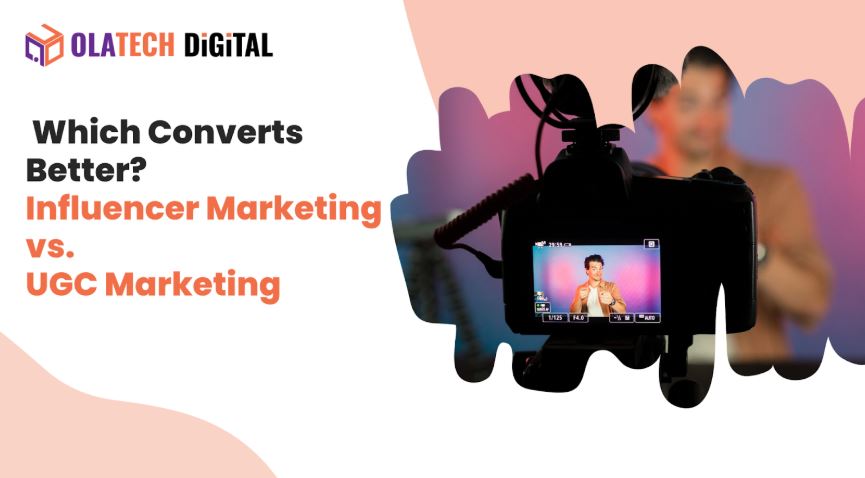
In the ever-evolving landscape of digital marketing, two powerful strategies continue to shape how brands connect with consumers — Influencer Marketing and UGC Marketing (User-Generated Content Marketing). Both approaches leverage social proof and authenticity to build trust, but when it comes to conversion rates, businesses often wonder which delivers better results. In this blog, we’ll break down the strengths, weaknesses, and conversion potential of both strategies to help you decide which aligns best with your brand goals.
Influencer Marketing is a collaboration between brands and individuals with a significant online following. These influencers promote products or services through sponsored content, reviews, or giveaways. The goal is to leverage the influencer's credibility and engagement to boost brand awareness and drive sales. Influencers can range from mega-celebrities to micro-influencers, and their recommendations carry weight due to the trust they’ve cultivated with followers.
UGC (User-Generated Content) Marketing involves content created by real users, not paid professionals. This includes customer reviews, testimonials, unboxing videos, and social media posts. Brands repurpose this content for promotion, showcasing authentic experiences from actual customers. The power of UGC lies in its authenticity — when buyers see real people using and loving a product, it builds strong social proof and trust.
| Feature | Influencer Marketing | UGC Marketing |
|---|---|---|
| Content Creators | Paid influencers or brand collaborators | Everyday customers and users |
| Cost | Higher due to influencer fees | Low to minimal; sometimes incentivized |
| Authenticity | Perceived as curated or promotional | Highly authentic and relatable |
| Control | Brands can script or guide content | Less control; content is organic |
| Reach | Broader via influencer’s audience | Limited unless brand-amplified |
Influencer Marketing shines in brand awareness and top-of-the-funnel engagement. Influencers can drive thousands of potential customers to your website or store. The visual appeal, professional content, and trust factor often lead to immediate purchases — especially in beauty, fashion, fitness, and tech industries.
Did you know? A study found that 49% of consumers rely on influencer recommendations when making purchase decisions. However, if the collaboration feels forced or overly commercial, audiences may lose interest quickly.
When it comes to bottom-of-the-funnel conversions, UGC Marketing often leads. A Nielsen report states that 92% of consumers trust user-generated content more than traditional ads. It’s genuine, peer-driven, and highly persuasive for today’s savvy buyers.
UGC works exceptionally well on product and landing pages, offering trust and relatability that push hesitant shoppers toward purchase. Think of Amazon reviews or tagged customer photos on Instagram — they’re UGC examples that convert.
The right choice depends on your goals, audience, and budget. Here’s how to decide:
For best results, many brands combine both — using influencer campaigns to spark buzz and gather UGC that can later be repurposed in ads, emails, or websites. This hybrid approach balances reach and authenticity.
Glossier built its empire on UGC by encouraging users to share product photos, creating community-driven marketing that skyrocketed conversions. Nike blends both — featuring top athletes while promoting everyday user stories through hashtags like #JustDoIt.
Both Influencer and UGC Marketing are vital for modern brands. Influencers spark awareness; UGC builds long-term trust. The most effective strategy? Use both together for stronger engagement and conversions.
At Olatech Digital, we craft performance-driven campaigns blending influencer reach with authentic UGC power. Whether your goal is brand visibility or better conversions, our team can help you achieve measurable success.
In the debate of Influencer vs. UGC Marketing, there’s no one-size-fits-all winner. Influencers offer scale and personality; UGC delivers trust and authenticity. By using both strategically, brands can unlock better engagement, loyalty, and conversions. Ready to level up? Combine both worlds to maximize your marketing ROI.